Twin Blades for a Clinking, Gurgling Retrieve
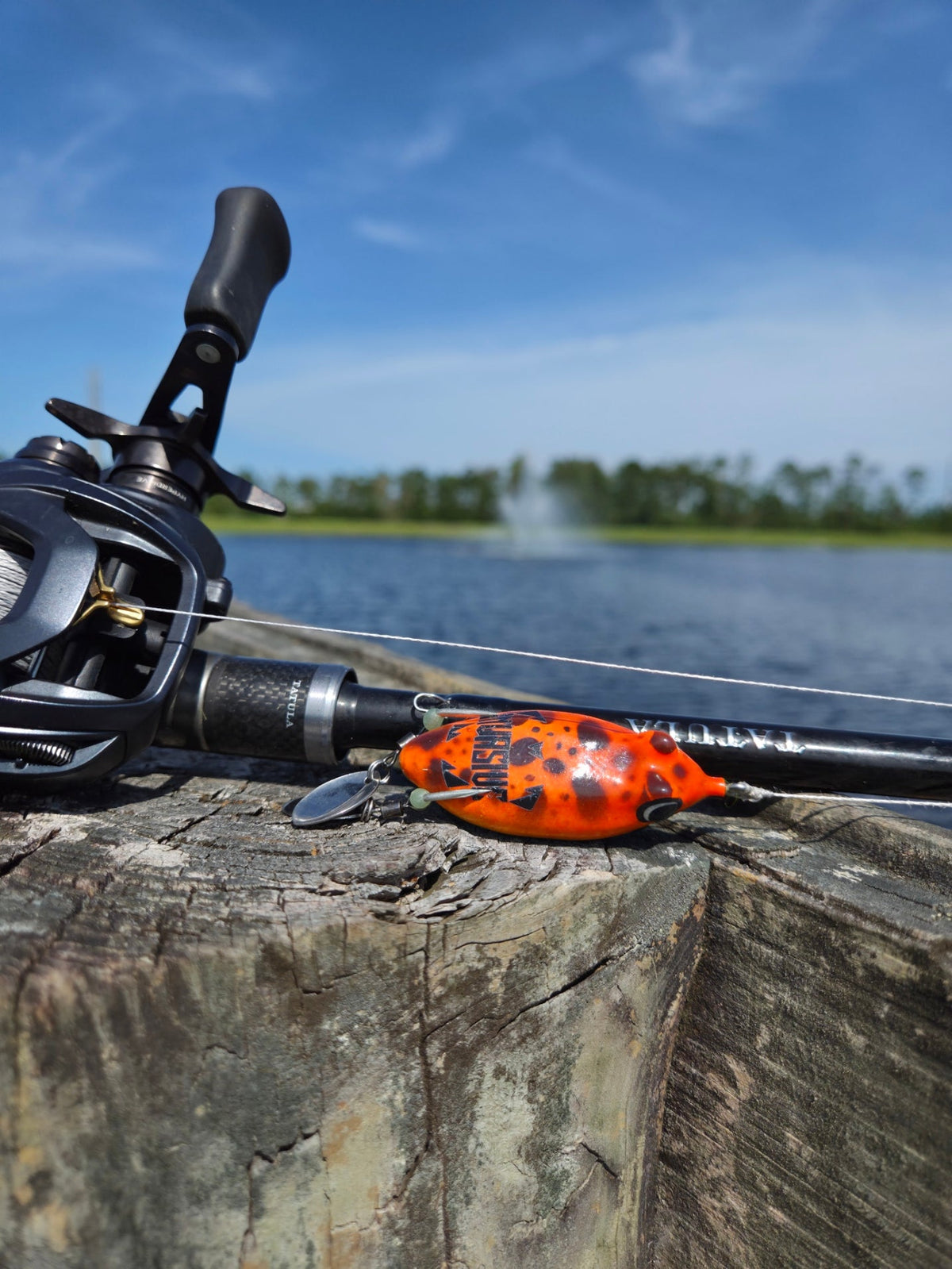
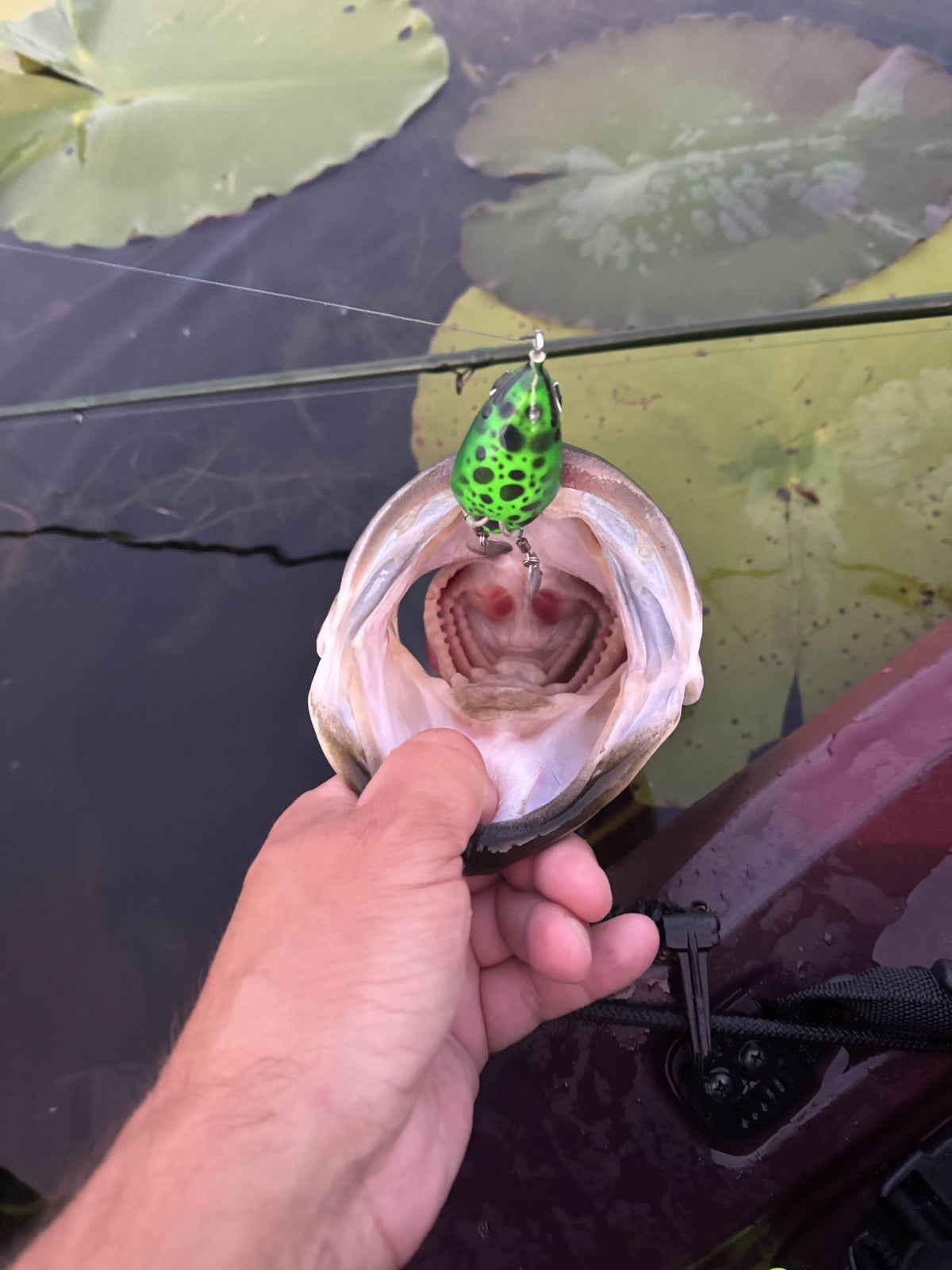
The Invasive Lures Chop Frog pairs a hollow body frog profile with two independently rotating trailing blades. The blades add metallic clinks, gurgling sound, flash, and surface disturbance as you retrieve, giving you a noisy alternative to a walking or popping frog.
Work it around grass edges, shade lines, and openings in vegetation for largemouth bass and snakehead. A soft silicone-latex body compresses under pressure, while an internal weight attached directly to the hook helps balance the lure.
Construction and Details
- Dual trailing blades connected directly to the hook with all-metal hardware.
- Independently rotating blades for sound, vibration, and flash.
- Blade positioning can be adjusted to vary the sound profile.
- Soft, collapsible silicone-latex hollow body.
- VMC hooks with a body shaped around the hook gap and angle.
- Internal weight secured to the hook.
- Wide-loop wire line tie connected directly to the hook assembly.
- Each lure is hand-tuned before packaging.
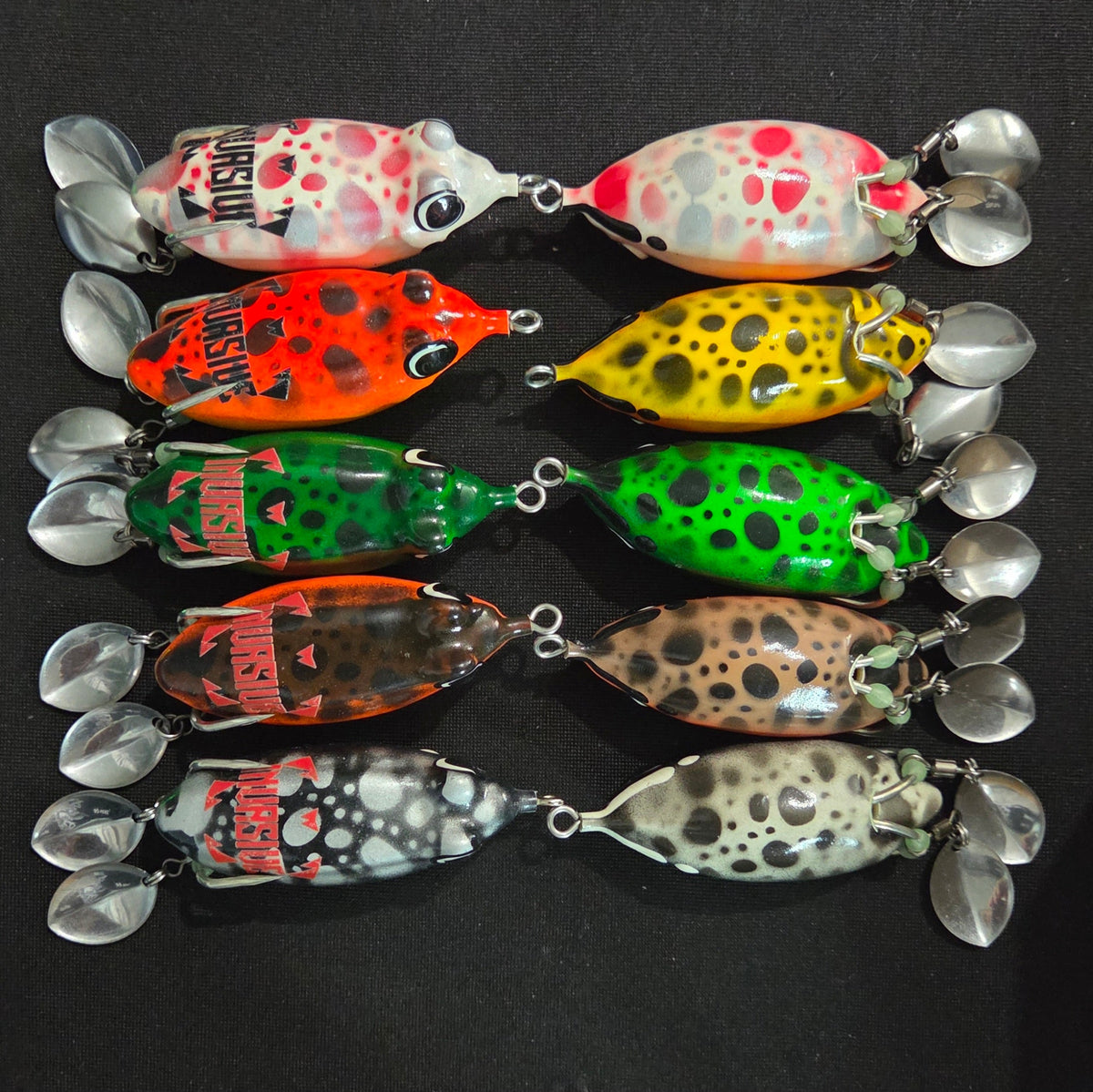
Color Options
Crime Scene, Orca, Grim Green, Cain, Flare, and Green Glow.
How to Fish It
Use a frog-capable rod and braided line suited to the cover. Cast along a grass edge or through a clear lane, then begin a steady retrieve that gets both blades moving. Watch the lure beside you to find a pace that produces clean clinking and gurgling without fouling the blades.
Try a slow crawl through an opening, or use short twitches followed by pauses beside likely holding cover. Increase the pace when you want to search a longer stretch. Check the blades for grass if the sound or action changes; exposed moving parts work best where they have room to move.
After a strike, wait until you feel the fish load the line before setting the hook firmly. Inspect the body, hooks, blade connections, line tie, and knot after fish or heavy cover contact. Let the lure dry before storing it.