Flymen Fishing Company
Flymen Alphlexo Crab | Seychelles Crab Fly | Body Tubing Construction | Tungsten & Bead Chain | Weed Guard | #2, #6 & #8 Micro | 19 Variants | Bonefish, Permit & GT | Flymen
Flymen Alphlexo Crab | Seychelles Crab Fly | Body Tubing Construction | Tungsten & Bead Chain | Weed Guard | #2, #6 & #8 Micro | 19 Variants | Bonefish, Permit & GT | Flymen
SKU:AC-KK-2
Couldn't load pickup availability
Seychelles Lodge Production Crab Fly. Body Tubing Construction. Tungsten & Bead Chain Weight Options. Standard Weed Guard. #2, #6 & #8 Micro Crab Hooks. 19 Variants. Bonefish, Permit, GT & Saltwater Flats Species.
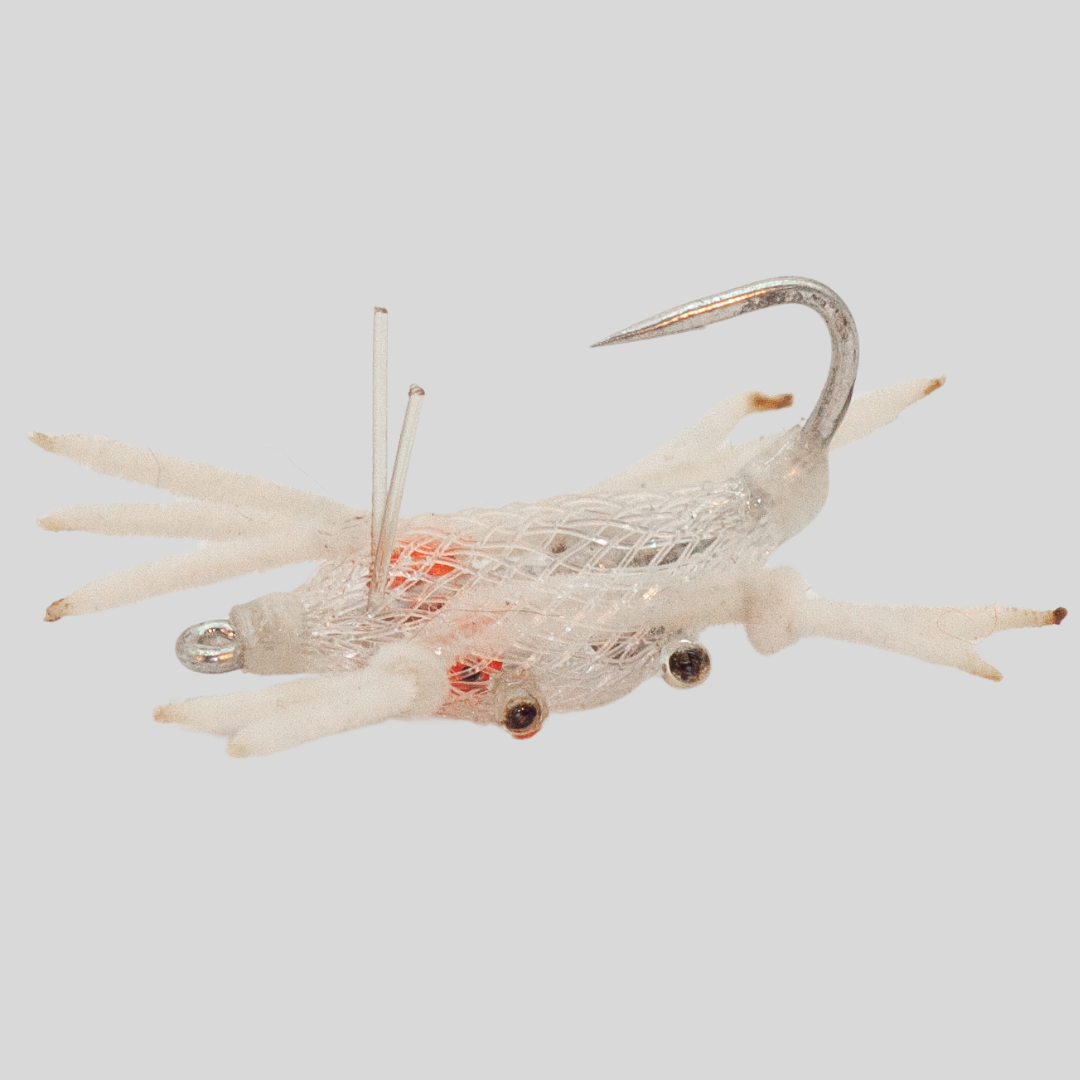
The Flymen Alphlexo Crab is the genuine production version of the crab pattern originally designed for saltwater flat fishing in the Seychelles — the same fly produced in South Africa for the lodge operations that guide some of the most demanding saltwater flats anglers in the world on GT, bonefish, and permit flats across the Cosmoledo, Alphonse, and Providence atolls. The Alphlexo Crab’s distinctive, realistic crab body is constructed using Flymen’s Body Tubing material, which produces a translucent, segmented crab shell profile that no other tying material replicates at this scale. Tungsten and bead chain weight options allow you to match the sink rate to the specific flat, depth, and species you are fishing. A weed guard is included as standard on every Alphlexo Crab and can be left in place for fishing over coral, grass, and structure or trimmed off when fishing weedless areas. Available in 19 variants across three hook sizes (#2, #6, and #8 Micro Crab) and multiple colors including King Crab, Clear, Mottled Tan, Blue Crab, Olive, Black, Orange, and Tan, with hot spot and orange leg variations on selected patterns.
The Seychelles Provenance — Why It Matters
The Seychelles outer atolls — Cosmoledo, Alphonse, Farquhar, and Providence — are among the most technically demanding saltwater flat fisheries in the world. The fish are large, wild, and in many cases completely unpressured, but the Indian Ocean flats clarity is extreme and the fish on coral and sand flats are among the wariest and most selective of any saltwater species. Crab patterns used in the Seychelles must pass a level of scrutiny that patterns designed for more pressured, easier-to-fool fish simply don’t have to survive. The Alphlexo Crab was developed specifically for these conditions — for permit and bonefish that will inspect a fly at close range before committing, for GT that ambush crabs along reef edges, and for the full range of flats species that use crab as primary forage across Indian Ocean atolls. The Body Tubing construction produces a crab body translucency and texture that exceeds what hand-tied crab patterns using conventional materials achieve, and it has been validated by the lodge guides who fish it daily against the most difficult fish in the world.
Body Tubing Construction — Why It’s Different
Standard crab patterns are tied with foam, deer hair, craft fur, or a combination of these materials to produce a crab carapace shape and leg profile. Body Tubing is a different approach: the tubing is stretched over the fly’s body frame and shrinks to conform to the underlying shape, producing a smooth, continuous, translucent crab shell surface that refracts light in a way that hard foam and dense materials cannot — the semi-transparent shell allows light to pass through, producing the color and glow of a real crab’s carapace in direct tropical sun. The legs, claws, and appendage materials protrude from the tubing body to produce movement and silhouette independently of the shell. The result is a crab fly that is as realistic at the closest inspection range as it is at a distance, which is the critical requirement for permit and bonefish that approach within inches before deciding to eat.
Tungsten vs. Bead Chain — Sink Rate Selection
- Bead Chain (Lighter) — sinks slowly; most effective in very shallow water on calm flats where a fast-sinking crab would land too hard and spook fish in ultra-thin water; the slower sink allows the crab to settle gently and naturally after landing, giving fish in 6–18 inches of water time to approach before the fly reaches the bottom; also more effective for bonefish in calm conditions where a soft, natural presentation is more important than depth control
- Tungsten (Heavier) — sinks fast; most effective in deeper water (18–36+ inches), stronger tidal current, and when targeting redfish and permit in water deep enough that the fly needs to reach the bottom before the fish passes; tungsten’s density allows a smaller, less visible weight to produce the same or greater sink rate than a larger bead chain eye — important for permit, which inspect the weight system as part of their close-range inspection of the fly; choose tungsten for any situation where depth control and fast descent are more important than soft landing
Weed Guard
Every Alphlexo Crab comes with a monofilament weed guard as standard. Leave it in place when fishing over coral heads, grass, and structured flats where the hook point would foul on every strip without protection. Trim it off cleanly at the hook bend when fishing sandy, open flats where fouling is not a concern and the cleanest possible hookset is the priority — a weed guard, even a well-designed one, adds a small amount of resistance to the hookset that matters on species with hard mouths like permit.
How to Fish It
- Permit — Lead, Sink & Wait — the most demanding presentation in saltwater fly fishing; cast 4–6 feet in front of a tailing or cruising permit and allow the Alphlexo Crab to sink completely to the bottom before the fish arrives; do not move the fly; a permit that sees a crab on the bottom will approach, tip down, and inspect at close range before committing; the only retrieve is a single short strip to move the crab a few inches if the permit stalls over the fly and doesn’t commit; a crab that moves too quickly or too far triggers a refusal from a permit that has approached expecting a stationary or very slowly moving prey item
- Bonefish — Short Strip & Pause — cast 4–6 feet ahead of a moving fish and allow the crab to sink; retrieve with very short, 2–3 inch strips to simulate a crab moving along the bottom; pause between strips to let the crab settle; bonefish will root on the Alphlexo Crab in the same way they root on live crabs on the bottom — the tail-up posture signals a fish that has the fly
- GT — Structure Edges & Reef Margins — GT target crabs along the edges of coral heads, reef drop-offs, and rock structure where crabs shelter; cast the Alphlexo Crab to the structure edge and allow it to sink to the bottom or mid-column; retrieve with slow to medium strips along the reef face; GT will charge from inside the structure to intercept a crab moving along the edge; use the heavier tungsten version for depth control in reef margin situations with moderate current
Variant Selection Guide
- King Crab — large orange-red crab coloration; most effective for permit and GT on reefs and coral structure where king crabs and large spiny species are present; a strong attractor color for GT in particular
- Clear / Clear with Hot Spot — translucent body that allows the bottom color and ambient light to show through; the most natural and least alarming option in crystal-clear water; hot spot variants (green, pink) add a concentrated color trigger at a specific point on the fly for fish that need an additional visual cue to commit
- Mottled Tan / Mottled Tan with Orange Legs — the most natural crab color match across tropical flats; matches the mottled sand-and-brown carapace of the swimming crabs and shore crabs that are the primary crab forage for permit and bonefish on Caribbean and Indian Ocean flats; orange legs add a subtle color trigger that mimics the leg coloration of many reef crab species
- Blue Crab — matches the Blue Crab (Callinectes sapidus), the dominant large crab species on Atlantic and Gulf flats from the Florida Keys through the Caribbean; most effective for permit and large redfish on Gulf and Atlantic flats where blue crab is abundant
- Olive — green-toned natural crab match; most effective on grass flats and seagrass beds where olive-toned crabs and swimming crabs are common; a strong color for bonefish in grass and over darker bottom substrate
- Black — dark, high-contrast silhouette; most effective in low-light conditions and at night when silhouette is the primary trigger; also effective on very dark bottom flats where a dark fly maintains visibility against the substrate
- Tan — natural sand-flat crab tone; the most universal color for open sand and white sand flats; matches the coloration of ghost crabs and other light-colored sand flat species; the go-to starting color when fishing unfamiliar or open sand flat environments
- Orange — warm attractor color; effective in stained water and for species that respond to warm-colored prey; also matches the coloration of spider crabs and certain reef crab species in Caribbean and tropical Pacific environments
- #8 Micro Crab (Black, Clear, Tan) — smallest hook size in the range; most effective for bonefish in ultra-shallow, ultra-clear conditions where a #2 or #6 crab is too large and lands too hard; also effective for permit in calm, clear conditions where size reduction is the difference between a refusal and a take
Target Species
Permit • Bonefish • Giant Trevally (GT) • Redfish • Triggerfish • Pompano • Snook • Any crustacean-feeding flats and reef species in tropical and subtropical saltwater environments.
Specs
- Pattern: Alphlexo Crab (Seychelles lodge production)
- Construction: Body Tubing (translucent crab shell)
- Hook Sizes: #2 | #6 | #8 Micro Crab
- Weight Options: Bead Chain | Tungsten
- Weed Guard: Standard (removable)
- Variants: 19 (color and hook size combinations)
- Target Fisheries: Seychelles, Bahamas, Florida Keys, Belize, Mexico, Gulf flats, Indo-Pacific
- Brand: Flymen Fishing Company
In stock and ready to ship. Select size and color from the variant menu.
Share