Flymen Fishing Company
Fish-Skull Forage Fly | Baitfish Streamer | Fish-Skull Head, Living Eyes & Frantic Tail | Bite-Proof Suede Tail | 1/0 Hook | 4 Colors | Trout, Bass & Freshwater | Flymen
Fish-Skull Forage Fly | Baitfish Streamer | Fish-Skull Head, Living Eyes & Frantic Tail | Bite-Proof Suede Tail | 1/0 Hook | 4 Colors | Trout, Bass & Freshwater | Flymen
SKU:FS-FF-T
Couldn't load pickup availability
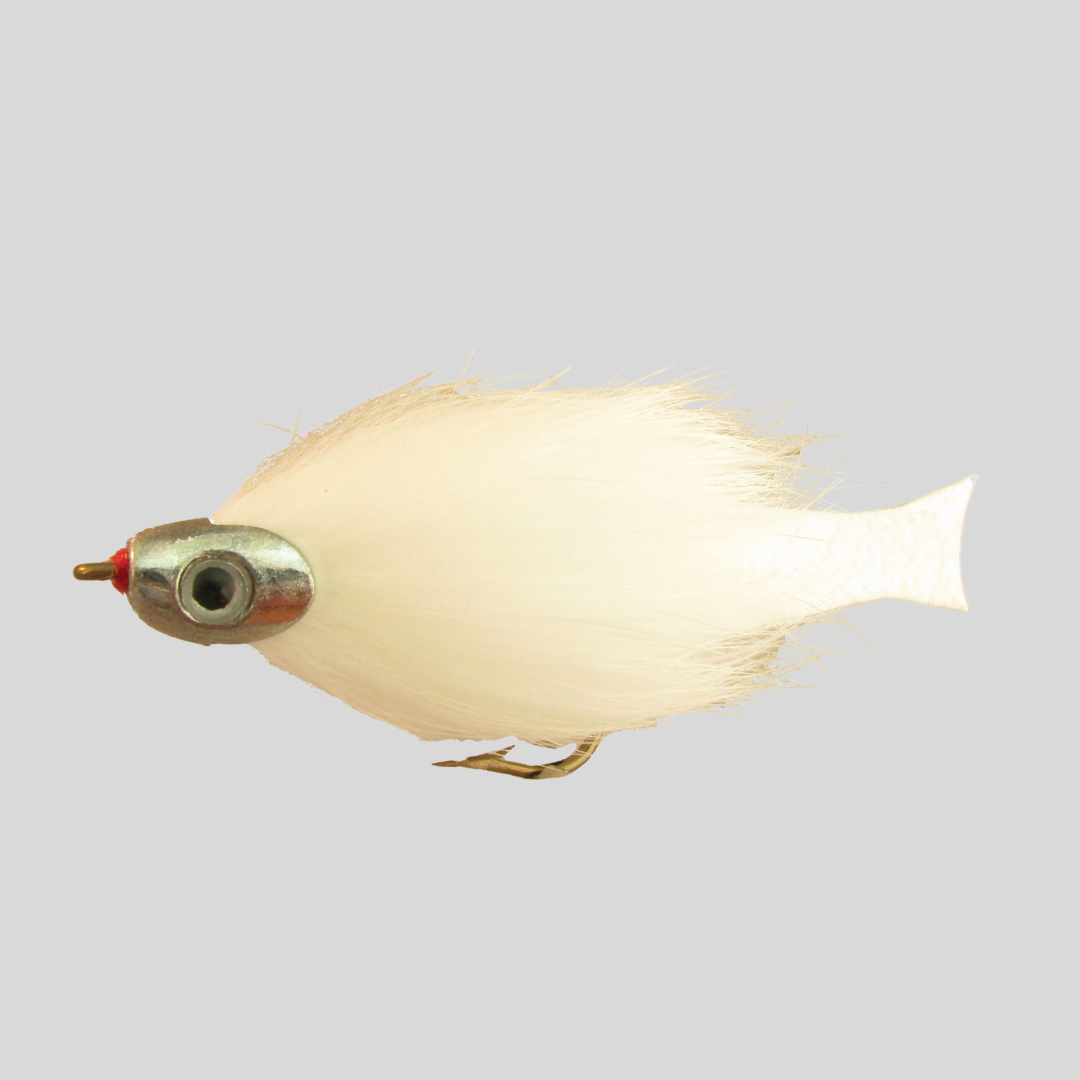
Freshwater Baitfish Streamer. Fish-Skull Baitfish Head. Fish-Skull Living Eyes. Fish-Skull Frantic Tail (Bite-Proof Suede). Natural Body Materials. 1/0 Hook. 4 Colors: Chartreuse, White, Tan & Black. Trout, Bass & Broad-Range Freshwater Species.
The Fish-Skull Forage Fly, designed by Mike Smith, is a freshwater baitfish streamer built around three core Fish-Skull components — the Fish-Skull Baitfish Head, Fish-Skull Living Eyes, and Fish-Skull Frantic Tail — to produce a compact, anatomically correct baitfish imitation that is effective on trout, bass, and a broad range of freshwater predators. Originally designed for river species, the Forage Fly has proven effective across stillwater, tailwater, and warmwater environments wherever freshwater predators are actively feeding on small forage fish. Tied on a 1/0 hook with natural body materials in four freshwater color combinations: Chartreuse, White, Tan, and Black.
The Three-Component Fish-Skull System
- Fish-Skull Baitfish Head — a weighted, sculpted metallic head that defines the front of the fly as a distinct baitfish head with a clear anatomical profile; the Baitfish Head’s weight produces the jigging, up-and-down action on the strip-and-pause retrieve that mimics a minnow diving and rising, and it sinks the fly efficiently without the need for additional lead or tungsten weight in the body construction; the metallic finish reflects light on the retrieve and contributes flash at the fly’s head where a predator’s attention is focused during the final approach to a target baitfish
- Fish-Skull Living Eyes — 3D photo-realistic baitfish eyes that provide the predatory trigger that flat painted eyes cannot at close range; sized to fit precisely in the Baitfish Head’s eye socket; predatory fish key on the eye of their prey as a primary targeting reference in the final moments before striking, and a Living Eye’s convex, internally detailed profile produces a more convincing at-close-range eye impression than any flat alternative
- Fish-Skull Frantic Tail — a pre-tied tail component made from near-indestructible, bite-proof suede that produces frisky, highly animated movement and realistic texture when wet; the Frantic Tail moves independently of the fly body, activating with the slightest current and producing a constantly twitching, living tail action on both the strip and the pause; because it is made from suede rather than natural fur or synthetic fiber, the Frantic Tail survives repeated strikes from toothy and hard-mouthed fish without the tearing and shredding that marabou and natural fiber tails sustain; a fly that continues fishing its tail intact after 20 fish is a significant practical advantage over patterns where the tail deteriorates mid-session
The “Forage” Concept — What It Imitates
Freshwater gamefish — trout, smallmouth bass, largemouth bass, perch, walleye, and pike — spend the majority of their feeding time pursuing small, abundant forage fish rather than the specific, large-profile baitfish that dedicated baitfish patterns imitate. Forage fish — shiners, chubs, dace, darters, young-of-year perch, minnows, and small sculpin — are the base of the freshwater food chain and are available to predators year-round in virtually every freshwater environment. The Forage Fly’s compact body, realistic head profile, and animated Frantic Tail produce a fly that suggests any of these small baitfish species simultaneously, making it an impressionistic generalist pattern rather than a specific match. This is the same strategy that makes the Clouser Minnow, the Woolly Bugger, and the Muddler Minnow effective everywhere — the fly looks and moves convincingly like “something to eat” without committing to a specific species that may not be present. The four color options allow for natural-color matching (White and Tan for silversides and pale minnows, Black for dark-backed species and low-light conditions) and attractor presentations (Chartreuse for high-visibility and stained-water fishing).
How to Fish It
- River & Stream — Strip Retrieve Through Pools & Runs — the Forage Fly’s original environment; cast across or quartering downstream into a pool, run, or current seam and retrieve with medium strips with pauses; the Baitfish Head’s weight produces a jig-like diving action on the strip and the Frantic Tail activates through the entire retrieve; cover the full water column by varying the sink time before beginning the retrieve; most effective for brown trout in deep pools, smallmouth bass along rocky current seams, and any predator positioned in current to intercept drifting and swimming baitfish
- Stillwater — Point & Count Down, Then Retrieve — in lakes and ponds, cast the Forage Fly to a target area (point, drop-off edge, submerged structure) and allow it to sink on a count before beginning the retrieve; the Baitfish Head’s weight sinks the fly efficiently and the Frantic Tail moves on the sink, making the fly active before the retrieve begins; retrieve with a mix of short strips and longer pulls to vary the jig action; most effective for largemouth bass near structure, perch along points, and trout in clear alpine lakes where baitfish patterns outperform nymphs
- Tailwater & Spring Creek — Short-Strip Near Structure — in regulated tailwaters and spring creeks where large trout hold near the bottom in deep, clear runs, cast the Forage Fly upstream of the target position and allow it to sink to the fish’s level before beginning short strips that keep the fly in front of the fish for as long as possible; the Living Eyes are particularly important in the clear, low-color water of tailwaters where fish have an extended, close-range view of the fly before committing
Color Guide
- Chartreuse — high-visibility attractor color; most effective in stained, off-color, or turbid water where maximum visibility is needed; also effective in clear water as an attractor-first presentation for aggressive, actively feeding fish; the brightest and most visible color in the lineup at distance
- White — the broadest natural baitfish match; mimics the white-bellied, silver-sided profile of most freshwater minnow and shiner species; most effective in clear water for selective, color-aware fish
- Tan — matches the coloration of sculpin, darters, and sand-colored minnow species; most effective in river and stream environments where bottom-hugging, neutral-colored forage fish are the primary prey; particularly effective for large brown trout that are keyed on sculpin along gravel and rocky substrate
- Black — high-contrast silhouette color; most effective in low-light conditions (dawn, dusk, overcast) and in dark or tannin-stained water; also a consistent producer at night for large brown trout that feed predominantly after dark
Target Species
Brown & Rainbow Trout • Smallmouth & Largemouth Bass • Brook Trout • Perch • Walleye • Pike • Carp • Any freshwater predator feeding on small forage fish.
Specs
- Pattern: Fish-Skull Forage Fly (designed by Mike Smith)
- Head: Fish-Skull Baitfish Head (weighted, metallic)
- Eyes: Fish-Skull Living Eyes (3D realistic)
- Tail: Fish-Skull Frantic Tail (bite-proof suede)
- Hook: 1/0
- Colors: Chartreuse | White | Tan | Black
- Brand: Fish-Skull by Flymen Fishing Company
In stock and ready to ship. Select color from the variant menu.
Share